Scholars of the Sacred: Dominican Theologians in Late Medieval Byzantium
| Authors | Likoudis, James |
| Tags | Biography & Autobiography, General, Religion |
| Publisher | En Route Books and Media, LLC |
| Published | 29 apr 2023 |
| Date | 12 ott 2025 |
| Languages | eng |
| Identifiers | isbn: 9798888701041, uri: https://enroutebooksandmedia.com/scholarsofthesacred/, lcc: 2023950137, google: dIU-0AEACAAJ |
Description
This in-depth study of the Catholic-Orthodox reunion efforts during the tumultuous 11th -15th centuries reveals the vital role played by the Dominican Order in shaping the theological and political discourse of that era, with a focus on the contributions of prominent Dominican figures such as John Stojkovich of Ragusa, Andrew Chrysoberges, Manuel Calecas, Demetrios Kydones, Thomas Aquinas and many others who played a critical role in the events leading to the Council of Florence.
TESTIMONIALS
“James Likoudis makes here a welcome contribution to the great ecumenical effort, reminding us of both the complicated and nuanced history of the Great Schism and of the many dedicated ‘moderate and noble spirits who desired an end to all schismatic activity and sought the purification of memories to prepare for a ‘dialogue of charity” which would restore the unity of Greek East and Latin West in common communion, particularly those of the Order of Preachers and their primary Orthodox interlocutors, whose contributions to the unity efforts of the early second Christian millennium ought not be underestimated. Likoudis reminds us that fidelity to Christ and his Church is also always fidelity to dialogue and reconciliation with our brothers and sisters in Christ.” —A.J. Boyd, STL, Instructor of Theology and Ecumenism, Institute of Pastoral Studies, Loyola University, Chicago
“The cause of durable ecclesial union requires a fair and informed hearing of those Catholic authors who have historically concerned themselves with the theological and jurisdictional issues surrounding such reunion. Although Thomism is not the Catholic Church’s sole philosophical or theological spokesperson, it surely represents her most important theological school. Therefore, it is to be hoped that Likoudis’s text might serve as an introduction to the important task of listening to classic Thomist readings of Orthodox thought.” —Matthew K. Minerd, PhD, Professor of Philosophy and Moral Theology, Byzantine Catholic Seminary of Ss. Cyril and Methodius, Pittsburgh, Pennsylvania, U.S.A.
“ Scholars of the Sacred collects Likoudis’ writings on Dominican contributions to the cause of unity between the eastern and western churches before the Council of Florence. The essays are useful as reminders of a neglected history and as studies in sacred doctrine, but more than once they also remind the reader that the unity of the Church is a supernatural reality of mind and heart—and one that suffers gravely when we begin to disdain or defy the successor of St Peter, the Church’s earthly guardian of unity.”—Fr. Bernard Mulcahy, O.P., Ph.D., Associate Professor of Theology, Pontifical College Josephinum, Columbus, Ohio, U.S.A.
“This is a privileged peek into work that goes on unceasingly behind the scenes—a work of diligent charity and uncompromising scholarship, all in the service of the unity Christ desires. It is a work that yields no earthly glory. Readers will find very few familiar names here. While the protagonists of this story patiently make history, histories rarely take note of them. Thanks to James Likoudis for, at last, giving the credit and the glory where they’re due.” —Mike Aquilina, general editor, Reclaiming Catholic History Series
“Dr. Likoudis’s book is a must-read for anyone interested in the Catholic Church’s history. He offers a concise and insightful description of the work of often unheralded Dominican scholars’ efforts to effect unity within the Catholic Church in the late Medieval Byzantium period.”—James Pomeroy, author of Living as Long as I Can as well as I Can
ABOUT THE AUTHOR
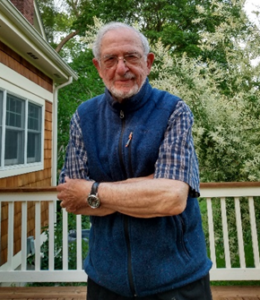 A convert from Greek Orthodoxy, James Likoudis is an internationally known apologist, one who has dedicated his life to reconciling his Eastern Orthodox brethren with the Catholic Church Jesus Christ founded. He excels in analyzing the key issues that separate Catholics and Orthodox, including regarding papal and conciliar history, and he cherishes all we hold in common in Christ.
Likoudis served for more than twenty-five years at the lay apostolate Catholics United for the Faith (CUF), including as president. His other books include The Pope, The Council, and The Mass ; The Divine Primacy of the Bishop of Rome and Modern Eastern Orthodoxy: Letters to a Greek Orthodox on the Unity of the Church ; Eastern Orthodoxy and the See of Peter: A Journey Towards Full Communion ; Ending the Byzantine Greek Schism ; and Heralds of a Catholic Russia: Twelve Spiritual Pilgrims from Byzantium to Rome. He has written and lectured widely on ecumenism, religious education, liturgy, sex education, family life, and the role of the laity in the Church. He is also a former college instructor in history and government, with over twenty years of teaching experience. Likoudis received an honorary Doctorate of Divinity from Sacred Heart Major Seminary in Detroit (2020). He and his late wife Ruth have six children, thirty-five grandchildren, and forty-five great-grandchildren.
ABOUT THE EDITOR
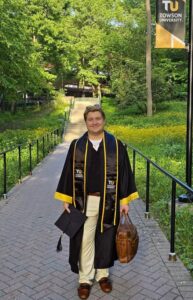
Andrew Likoudis is a Catholic scholar and entrepreneur with degrees in Communication from Towson University and Business Administration from the Community College of Baltimore County. He has served as a fellow in Economic Development at Johns Hopkins University and in Marketing Development with Goldman Sachs’ 10,000 Small Businesses initiative. His professional experience includes a role as a business development administrative assistant at the Cathedral of Mary Our Queen in Baltimore, Maryland. Additionally, he has nearly a decade of experience providing hospitality through hosting with Airbnb.
Currently, Andrew is serving as a full-time summer intern at EWTN, where he writes long-form commentary and analysis for the National Catholic Register , with a particular focus on the post-conclave Church and questions of reform, authority, and ecclesial identity.
Andrew is the founder and president of the Likoudis Legacy Foundation, a research institute dedicated to ecumenism and interreligious dialogue, and serves as editor-in-chief of its journal, The Kydones Review. He is a frequent contributor to Where Peter Is , and has also written for Catholic Review, Homiletic and Pastoral Review, Catholic World News, Fellowship and Fairydust Magazine , and Philosophy Now. His academic interests focus on the sociological intersection of faith and culture, also hosting a column, Nature and Grace, at Patheos.com. He has edited six books on Catholic ecclesiology and the papacy, and has compiled and edited over ten volumes in total.
Andrew is a member of the International Marian Association, and an associate member of the Fellowship of Catholic Scholars, the Mariological Society of America, and the Society for Catholic Liturgy. He additionally serves as a young adult community representative on the Lay Pastoral Council of the Archdiocese of Baltimore and is a dedicated parishioner at the Basilica of the National Shrine of the Assumption of the Blessed Virgin Mary, America’s First Cathedral.
Outside of his professional endeavors, Andrew enjoys kayaking, cooking, basketball, dancing bachata, and playing chess.
10/16/25: 15
Demetrius and his brother Prochorus Cydones for translations of about sixteen works of the Common Doctor into Greek.
10/16/25: 87
Genoese quarter at Pera-Galata on the outskirts of Constantinople.
Does this still exist today? Yes.
10/17/25: 117
branch if the Dominican Order called the Society of Pilgrim friars for Christ,
Branch in what sense? I thought O.P. was monolithic.
10/17/25: 120
shutting up our books, let us embrace the truth and be united in the Church of God.3
10/19/25: 130
he wrote one of the first systematic treatises on the Church, which deserves to be better known (and translated into English).
John Stojkovich (circa 1392-1444)
10/19/25: 134
Tractatus de Ecclesia (Treatise on the Church) which a distinguished modern theologian hailed as one of the most important works of medieval Catholic ecclesiology,
Did Fr. Jaki mention this in his dissertation?
10/19/25: 134
Fr. Gustav Thils, Le ‘Tractatus de ecclesia’de Jean de Raguse, (Angelicum, 1948).
Did Fr. Jaki mention this in his dissertation?