News:

"[In this life,] to love God is something greater than to know Him." —St. Thomas Aquinas

Main Menu

Riverrun on Modernism according to the Magisterium

Started by Kephapaulos, November 29, 2021, 04:27:20 AM

Previous topic - Next topic

0 Members and 0 Guests are viewing this topic.

Kephapaulos

https://www.youtube.com/watch?v=jTV2JgPIWt0

I have some misgivings about this because can not someone be considered a modernist in a sense if he holds to any of the criteria that constitutes modernism? Even if not all of the criteria laid out by St. Pius X?

Riverrun makes a distinction between phenomenology that is aggressively atheistic and phenomenology that is indifferent, i.e. of John Paul II. Can we make any proper use of phenomenology though? Or any modern philosophy at all?

Geremia


QuoteCan we make any proper use of phenomenology though? Or any modern philosophy at all?
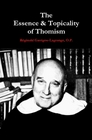
As Fr. Garrigou-Lagrange, O.P., wrote in Essence & Topicality of Thomism:
QuoteAs we showed elsewhere,51 Thomism has a great assimilative power (we do not say "adaptive"). It accepts all that is positive and demonstrable in other conceptions, but it rejects what they unduly deny. So, it is as a superior synthesis beyond the systems opposed to themselves; beyond the evolutionism of Heraclitus or of the immobilism of Parmenides, with its doctrine of being divided into potentiality and actuality. It is also beyond mechanism and dynamism with its doctrine of matter and form of bodies; beyond psychological determinism and liberalism, as it admits that free choice is always directed by the last practical judgment, but it itself accepting that it be the last. It is also above pantheism that absorbs God into the world and that which absorbs the world into God; for the same reason, it is, with its doctrine of divine motion, beyond the occasionalism that suppresses secondary causes and beyond the Molinism that removes the secondary cause from the divine premotion.

51. Réginald Garrigou-Lagrange, Reality: A Synthesis of Thomistic Thought, trans. Patrick Cummins (St. Louis, Mo.: Herder, 1950), chap. 54, "Article Two: The Assimilative Power Of Thomism."


riverrun

#2
Quote from: Kephapaulos on November 29, 2021, 04:27:20 AMhttps://www.youtube.com/watch?v=jTV2JgPIWt0

I have some misgivings about this because can not someone be considered a modernist in a sense if he holds to any of the criteria that constitutes modernism? Even if not all of the criteria laid out by St. Pius X?

Riverrun makes a distinction between phenomenology that is aggressively atheistic and phenomenology that is indifferent, i.e. of John Paul II. Can we make any proper use of phenomenology though? Or any modern philosophy at all?
No, not on that basis alone, because the modernism condemned by St. Pius X is presented as a comprehensive and interconnected theological system, whose errors are identified and condemned on the authority of the Church herself. Holding some proposition associated with that system does not necessarily establish that someone adheres to the system as such, although particular propositions may themselves be independently condemned.

It's like asking me whether somebody can be convicted of a crime if the action they committed possesses only one or two of the three essential elements of the crime. No, at least not on the legal authority of the state, they cannot be. This does not mean that the particular actions involved might not constitute some other offense, but that you cannot simply attribute the whole offense to someone without establishing what is necessary to constitute it.

Of course, the term modernism is older than the condemnations of the Church and significantly wider in the history of ideas than the theological system described by St. Pius X. But attempting to operate from this wider definition of modernism amounts merely to an exercise of speculative theological or historical classification, which is not sufficient in itself to convict anyone of a theological error, much less to establish that he holds the system condemned by the Church. And even where particular theological errors can be identified, it would be better to name them properly rather than simply accuse someone of modernism.

In most actual cases, the use of the term amounts to a slur and causes intellectual and theological confusion, not only for the person accused but also for the user of the term.

I even looked into the people said to have been condemned for modernism one time, and the actual grounds and kinds of action varied considerably. There were formal personal censures, as with Loisy and Buonaiuti, but there were also condemnations of publications, disciplinary restrictions, and investigations. Those are not interchangeable, and you cannot simply treat everyone who came under suspicion or restriction as having been personally condemned for modernism.

The Church's measures explicitly extended to people and publications considered favorable to modernism or liable to prepare the way for it, not only to those established to hold its condemned doctrines. This is why you cannot simply point to a story of so-and-so being investigated by so-and-so in relation to modernism as though that settled the matter. That doesn't, by itself, mean he even held any of the relevant ideas. It means an authority thought there was something to investigate, not that the investigation established the accusation. And even where restrictions or penalties followed, you have to examine what was actually judged and on what grounds.

It's not hard to see why, especially among Americans who like Birch Society and McCarthy-style investigations, some might think this is a cool way to go after something, and that's fine within its limits. But if we're going to say that somebody is actually a communist—that is to say, by analogy, if we're going to say that somebody is actually a modernist—then it behooves us to see whether he actually puts forward the relevant condemned ideas, rather than merely being associated with some magazine or group or whatever that is vaguely in the political and ideological direction we don't like.