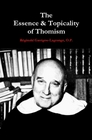
When reading Fr. Garrigou-Lagrange's
Reality: A Synthesis of Thomistic Thought, I made notes of where he discussed Scotus (and Suarez) vs. St. Thomas. The differences are very radical.
According to Scotus, in contrast to St. Thomas,
- being is univocal, not analogical;
"Being, for St. Thomas, is a notion, not univocal but analogous, since otherwise it could not be divided and diversified. A univocal idea (e. g.: genus) is diversified by differences extrinsic to genus (animality, e. g.: by specific animal differences). Now, nothing is extrinsic to being (ens). Here Parmenides enters. Being, he says, cannot be something other than being, and the only other thing than being is nothing, is non-being, and non-being is not. St. Thomas replies: 'Parmenides and his followers were deceived in this: They used the word being (ens) as if it were univocal, one in idea and nature, as if it were a genus. This is an impossible position. Being (ens) is not a genus, since it is found in things generically diversified.' [In Metaph.: Bk. 1, chap. 5, lect. 9. See the fourth of the twenty-four Thomistic theses].
"Duns Scotus returns in a manner to the position of Parmenides, that being is a univocal notion. Suarez, seeking a middle way between Aquinas and Scotus, maintains that the objective concept of being (ens) is simply one (simpliciter unus): and that consequently everything that is in any manner (e. g.: matter and essence) is being in act (ens in actu). This viewpoint granted, we can no longer conceive pure potency. It would be extra ens, hence, simply nothing. The Aristotelian notion of real potency (medium between actuality and nothing) disappears, and the argument of Parmenides is insoluble.
"We understand now why, shortly after the Council of Trent, a Thomist, Reginaldus, O. P.: formulated as follows the three principles of St. Thomas:
"Ens (being) is a notion transcendent and analogous, not univocal.
God is pure act, God alone is His own existence.
Things absolute have species from themselves; things relative from something else."
- angels reason as humans do;
- the will, not the intellect, is primary (against Thomistic Thesis #21);
- God would've incarnated even if Adam had not sinned, albeit with an impassible body;
- the supernatural end of man can be naturally known (cf. Feingold's The Natural Desire to See God According to St Thomas and His Interpreters Faith and Reason Studies in Catholic Theology and Philosophy ch. 4 "Scotus" (p. 47 f.).
- the accidental form of "this-ness" (hæcitas or haecceity) is the principle of individuation, not matter.
There are probably many more differences.
In the beginning of
ch. 3 "The Thomistic Commentators" of Reality, Fr. G.-L. refuses to mention the "eclectic commentators, who indeed borrow largely from Thomas, but seek to unite him with Duns Scotus, refuting at times one by the other, at the risk of nearly always oscillating between the two, without ever taking a definite stand." Scotus and St. Thomas radically disagree on philosophical principles.